
 EN
EN
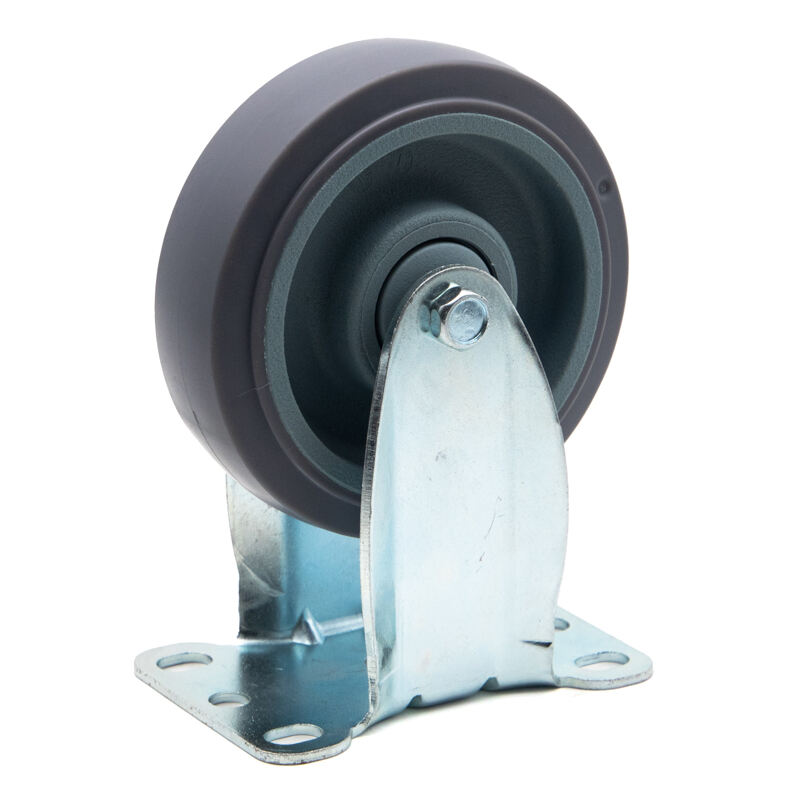
The Science Behind Low-Noise Castor Wheel Design
Understanding Noise Generation in Castor Wheels
Noise from castor wheels comes from several places really. There's the friction between wheel and floor, then there are those annoying vibrations that travel through whatever structure they're attached to, plus all that air moving around as the wheel spins. Research indicates standard office chair castors create somewhere between 55 to 65 decibels when rolling at about 3 miles per hour. That's roughly the same volume level as someone talking normally across the room, which definitely interrupts concentration in spaces meant to be quiet. Floors made of hard materials actually boost these high pitch vibrations by around 35 percent compared to carpeted surfaces. So what does this mean? Well, picking the right materials and thoughtful design becomes pretty important if we want to keep noise levels down in workspaces.
How Materials Influence Vibration and Sound Damping
| Material | Hardness (Shore A) | Noise Reduction | Ideal Application |
|---|---|---|---|
| Polyurethane | 85-95 | 18% reduction | Hospital equipment carts |
| Rubber | 60-80 | 25% reduction | Library book trolleys |
| TPR | 70-90 | 12% reduction | Office furniture |
Research published in the Journal of Industrial Acoustics (2023) shows rubber’s viscoelastic properties dissipate 40% more vibrational energy than rigid plastics. However, polyurethane offers superior durability, with only 0.3mm annual tread loss under 200kg loads—68% better wear resistance than rubber.
Precision Engineering: The Role of Ball Bearings in Silent Movement
Sealed, grease-packed ball bearings eliminate metal-on-metal contact, significantly reducing rotational noise. Laboratory testing reveals:
- Single-row bearings reduce noise by 9 dB compared to bushings
- Double-row designs achieve 14 dB reduction through improved load distribution
- Precision-ground races (<0.001mm tolerance) prevent harmonic resonance
These engineering refinements ensure smooth, silent motion critical in acoustically sensitive settings.
Design Integration: From Prototype to Production for Optimal Noise Reduction
Advanced prototyping tools like laser vibrometry identify structural resonances, enabling engineers to refine designs before production. Key interventions include:
- Modifying wheel web patterns to disrupt standing waves
- Optimizing hub geometry for harmonic cancellation
- Implementing asymmetric tread profiles that break up repetitive vibration signatures
A 2024 case study demonstrated this iterative approach reduced hospital bed castor noise from 62 dB to 49 dB—below WHO-recommended nighttime levels for hospitals.
Case Study: CasterShox® Technology in Healthcare Acoustics
A leading medical equipment manufacturer deployed CasterShox® dampers across its IV pole fleet, achieving:
- 17 dB peak noise reduction in clinical trials
- 83% decrease in staff noise complaints
- 41% longer bearing life due to effective vibration isolation
The system’s frequency-tuned elastomers absorb 92% of impact energy before it reaches cart structures, demonstrating that engineered soft materials can deliver both quiet operation and long-term durability.
Comparative Analysis of Castor Wheel Materials for Noise Control
Polyurethane Castor Wheels: Durability Meets Quiet Performance
Polyurethane reduces operational noise by 40–60% compared to hard plastics (Ponemon 2023), thanks to its balanced density and elasticity. Its closed-cell structure limits vibration transfer while supporting loads up to 800 lbs. Engineers enhance performance using tapered tread patterns that prevent harmonic resonance on tile and vinyl flooring.
Rubber Castor Wheels: Superior Shock Absorption and Low Noise
Natural rubber reduces impact noise by 65% on uneven surfaces through molecular energy dispersion. Ideal for hospitals and libraries, rubber performs best under 500 lbs; beyond that, wear accelerates. Modern vulcanization techniques extend service life by 30% without compromising acoustic quality.
TPR vs. Polyurethane vs. Rubber: A Noise Reduction Comparison
| Material | Noise Level (dB) | Load Capacity | Ideal Surface |
|---|---|---|---|
| Thermoplastic | 52-58 | 300-600 lbs | Carpets, epoxy floors |
| Rubber | 48-55 | 200-500 lbs | Tile, concrete |
| Polyurethane | 45-50 | 400-800 lbs | Hardwood, linoleum |
Polyurethane provides the broadest balance, offering a 12% wider noise-reduction range than TPR. While rubber leads in shock absorption, it requires more frequent replacement in high-traffic applications.
Debunking the Myth: Are Softer Materials Always Quieter?
Contrary to popular belief, wheels with Shore hardness below 70A generate 15% more noise on hard surfaces due to increased contact area. Medium-density polyurethane (80A–90A) reduces resonance frequencies by 120–150 Hz compared to ultra-soft alternatives, proving optimal stiffness—not maximum softness—is key to minimizing noise.
Applications of Low-Noise Castor Wheels in Sensitive Environments
Enhancing Office Acoustics with Quiet Castor Wheels
Open-plan offices lose an average of 86 minutes of productive time per employee daily due to noise distractions (Journal of Environmental Psychology, 2023). Low-noise castors mitigate this by reducing high-frequency rolling sounds by 18–22 dB. Key features include:
- Polyurethane treads that absorb vibrations from floor joints
- Sealed bearings eliminating metallic "clicking" on hard surfaces
- Lateral stability systems preventing squeaking during turns
These improvements contribute to quieter, more focused workspaces.
Hospitals: Supporting Patient Recovery Through Reduced Noise Pollution
Hospital nighttime noise often exceeds the WHO-recommended 35 dB threshold, interfering with patient sleep. Silent castor systems help by:
- Reducing peak noise events from medication carts by 40%
- Limiting vibration transmission to below 0.5 m/s²—safe for sensitive imaging devices
- Enabling smooth transitions between flooring types to avoid thudding impacts
Quiet mobility supports healing and improves staff efficiency.
Schools and Libraries: Minimizing Distractions in Learning Spaces
A 2023 classroom acoustics study found 72% of students missed verbal instructions due to chair or cart noise. Noise-optimized castors improve auditory clarity by:
- Maintaining consistent rolling resistance (±5%) across carpet, tile, and laminate
- Using frequency-dampening materials targeting 125–500 Hz—the core human speech range
- Incorporating anti-skid brakes to prevent unintended movement during instruction
These features foster calmer, more effective learning environments.
Innovative Technologies Advancing Castor Wheel Silence
Pneumatic Castor Wheels: Smooth and Quiet on Rough Surfaces
Pneumatic castors have those air filled tires made from softer rubber materials that really soak up bumps and cracks in the floor, which cuts down on noise quite a bit compared to hard wheels. Some tests actually show around a 40% reduction in overall noise levels. The flexible treads also help dampen vibrations, so these wheels work great in places like old warehouses where the concrete isn't always flat, or in hospitals where quiet is important for patient comfort. When moving quickly across surfaces, these castors can lower peak noise by somewhere between 12 and 15 decibels. Pretty impressive considering they still handle pretty heavy weights, typically supporting anywhere from 500 to 800 pounds depending on the specific model being used.
Spring-Loaded Casters for Impact Absorption and Sound Dampening
Spring loaded casters work with either helical coils or torsion springs to protect equipment against shocks from the floor. These caster systems can actually absorb around 70 to maybe even 85 percent of that bouncing energy before it turns into annoying noise, which means less vibration overall in places like factories and hospitals. According to some research published last year in the field of workplace ergonomics, facilities that switched to these spring systems saw their background noise drop by about 8 decibels. That makes a real difference too because workers can now stay on the job longer without hitting those OSHA safety thresholds for noise exposure time limits.
CasterShox® and Other Smart Damping Systems in Industrial Use
The latest smart damping technology actually combines elastomer springs with hydraulic buffers right inside the castor hub itself. Independent tests have shown that this setup cuts down shock loads by around 80 percent while making things noticeably quieter too, reducing noise levels between 10 to 15 decibels when handling weights from 300 up to 1,000 pounds. On factory floors where these systems were installed, workers reported fewer complaints about noisy carts, with one plant seeing an impressive drop of 92% in such issues. The wheels also lasted almost four times longer than regular castors before needing replacement. These systems adjust automatically depending on what's being carried and the type of flooring, keeping noise below 65 decibels in most situations throughout the day.
Selecting the Right Low-Noise Castor Wheel by Environment and Load
Matching Castor Material to Floor Type and Noise Requirements
Getting good noise control really comes down to matching wheel materials with the right floor types. Polyurethane wheels work great on hard surfaces such as concrete or tiles since they run quietly around 45 decibels or lower and won't leave marks behind. For places with rougher ground conditions, rubber wheels take the cake because they soak up those annoying vibrations. This matters a lot in hospital settings where keeping noise levels under 35 dB can actually help patients recover better. Then there's TPR which sits somewhere in between these extremes offering decent noise dampening along with being able to handle heavier loads, although how well it works does depend somewhat on the ambient temperature. When looking at materials for sound sensitive areas, it makes sense to focus on ones that tackle those low frequency vibrations below 100 Hz so buildings themselves don't start shaking from all the noise.
Balancing Load Capacity, Mobility, and Acoustic Performance
Silence should not come at the cost of function. Consider this comparative overview:
| Material | Avg. Noise (dB) | Max Load (kg) | Ideal Floor Type |
|---|---|---|---|
| Polyurethane | 40-45 | 180 | Hard, smooth surfaces |
| Rubber | 35-40 | 120 | Uneven, mixed surfaces |
| TPR | 45-50 | 220 | Industrial settings |
Softer rubber minimizes noise but sacrifices load capacity, while reinforced polyurethane handles heavier loads without exceeding 50 dB. In education environments, dual-density wheels with noise-dampening cores support up to 300 kg at 42 dB—showcasing how advanced materials can meet competing demands.
Frequently Asked Questions (FAQ)
What are the common sources of noise in castor wheels?
Common sources of noise in castor wheels include friction between the wheel and floor, vibrations traveling through the structure they're attached to, and air displacement as the wheel spins.
Why is rubber preferred for library trolleys?
Rubber is preferred for library trolleys because it reduces noise by 25% due to its shock absorption capabilities and viscoelastic properties.
How do ball bearings contribute to silent movement?
Ball bearings contribute to silent movement by eliminating metal-on-metal contact, which significantly reduces rotational noise.
What impact did CasterShox® technologies have in healthcare settings?
CasterShox® technologies achieved a 17 dB peak noise reduction and an 83% decrease in staff noise complaints in healthcare settings.
How does polyurethane compare to rubber and TPR in noise reduction?
Polyurethane offers a broader noise-reduction range than TPR and provides durability, while rubber is superior in shock absorption but requires frequent replacements.
Table of Contents
-
The Science Behind Low-Noise Castor Wheel Design
- Understanding Noise Generation in Castor Wheels
- How Materials Influence Vibration and Sound Damping
- Precision Engineering: The Role of Ball Bearings in Silent Movement
- Design Integration: From Prototype to Production for Optimal Noise Reduction
- Case Study: CasterShox® Technology in Healthcare Acoustics
- Comparative Analysis of Castor Wheel Materials for Noise Control
- Applications of Low-Noise Castor Wheels in Sensitive Environments
- Innovative Technologies Advancing Castor Wheel Silence
- Selecting the Right Low-Noise Castor Wheel by Environment and Load
- Frequently Asked Questions (FAQ)


