
 EN
EN
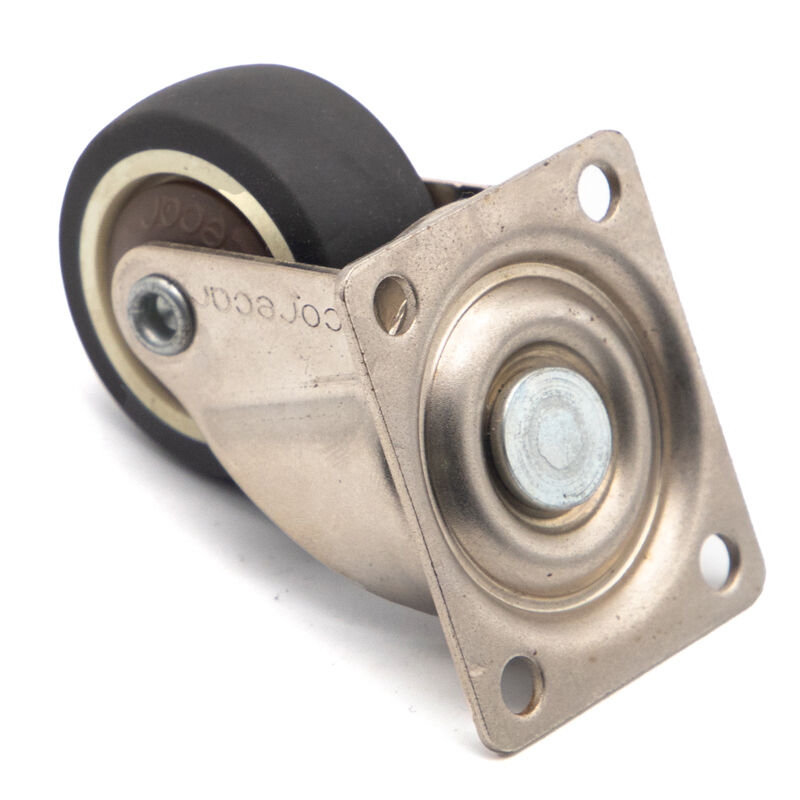
Understanding Furniture Wheel Types and Core Materials
Hard vs. Soft Tread Wheels: Impact on Mobility and Floor Safety
Hard tread wheels (85D–95D Shore hardness) deliver high load capacity and prevent sinking on carpet or uneven surfaces—but risk scratching hardwood, tile, and luxury vinyl flooring. Soft tread wheels (55A–80A Shore hardness) absorb vibrations, reduce noise, and protect polished floors, though they require more effort to move heavy furniture. A 2023 industry study found soft wheels cut floor damage incidents by 72% in commercial environments. For optimal performance:
- Use hard wheels on carpet or rough/uneven flooring
- Choose soft wheels for hardwood, tile, LVT, and polished concrete
- Prioritize dual-density designs when available—they combine surface protection with rolling efficiency
Material Breakdown: Polyurethane, Nylon, Rubber, and Thermoplastic Elastomers
Material selection balances floor safety, acoustic performance, chemical resistance, and load demands:
| Material | Best For | Load Capacity | Floor Safety | Key Attributes |
|---|---|---|---|---|
| Polyurethane | Retail, offices, education | Medium | Non-marking | Quiet operation, abrasion resistance, chemical resilience |
| Nylon | Industrial equipment | High | Moderate | Impact-resistant up to 400 lbs per wheel; rigid but prone to marking |
| Rubber | Healthcare, labs, classrooms | Medium | High | Superior shock absorption; degrades faster outdoors or under UV exposure |
| Thermoplastic Elastomers (TPE) | Food service, cleanrooms, light-colored epoxy floors | Variable | Superior | UV-stable, static-dissipative, zero-marking at 95A hardness |
Recent TPE formulations achieve near-zero marking on sensitive surfaces—critical for facilities with polished concrete, luxury vinyl, or light-colored epoxy flooring.
Matching Furniture Wheels to Load Capacity and Usage Environment
Calculating Required Weight Rating per Wheel
Divide your furniture’s total weight by the number of wheels, then add a 20% safety margin. For example, a 400 lb cabinet on four casters requires wheels rated for at least 120 lbs each (400 ÷ 4 = 100 × 1.2 = 120). Exceeding this stresses wheel joints, bearings, and treads—accelerating wear and increasing failure risk. Always prioritize dynamic (rolling) load ratings over static (stationary) specs for mobile furniture, as dynamic forces impose greater mechanical stress.
Indoor Office, Healthcare, Retail, and Heavy-Duty Industrial Applications
- Office & Healthcare: Soft-tread polyurethane or rubber wheels (Shore A 70–85) minimize noise and prevent scuffing on VCT, LVT, and clinical-grade flooring. Non-marking certification is essential for compliance in sterile or high-visibility areas.
- Retail: Medium-hardness polyurethane (Shore A 90+) offers mobility across tile and concrete while resisting abrasion from frequent cart movement and foot traffic.
- Industrial: Reinforced nylon or UV-stable rubber (Shore D 55+) withstands chemical exposure, debris, extreme loads (>500 lbs/wheel), and temperature fluctuations—especially critical in warehouses with skylights or outdoor access.
Surface condition and usage frequency shape material choice: softer treads excel where floor protection is non-negotiable; harder compounds suit durability-critical, high-load applications—even if they sacrifice some acoustic comfort.
Floor Compatibility and Protection: Avoiding Scratches, Marks, and Damage
Wheel composition directly influences floor integrity. Mismatched hardness or material can cause irreversible scuffs, scratches, or pigment transfer—especially on light-colored or polished surfaces.
Wheel Hardness (Shore A/D Scale) and Its Effect on Hardwood, Tile, and Carpet
The Shore scale measures polymer hardness: Shore A for flexible elastomers (e.g., rubber, TPE), Shore D for rigid plastics (e.g., nylon, hard PU). Soft wheels (Shore A 55–85) distribute load and absorb impact—reducing scratch incidence on hardwood, LVT, and polished concrete. Industry data shows wheels above Shore D 65 increase hard-surface scratching by 40%. For carpeted areas, medium-hardness wheels (Shore D 45–55) maintain traction without crushing or fraying fibers.
Non-Marking Certification and UV-Stable Formulations for Light-Colored Floors
Non-marking certification confirms third-party validation that wheels won’t transfer pigment or leave scuffs—even after repeated use on light floors. These wheels use UV-stable polymers that resist yellowing, cracking, or embrittlement near windows or under fluorescent lighting. Advanced formulations also mitigate static buildup, which otherwise attracts dust and compromises cleanliness in labs, food prep zones, and healthcare settings.
Installation, Maintenance, and Long-Term Performance of Furniture Wheels
Proper installation and consistent maintenance are foundational to caster longevity, floor protection, and operational safety. Neglecting either contributes to premature failure, instability, and avoidable facility damage—costing businesses an average of $740k annually in material handling incidents, per the Ponemon Institute (2023).
Mounting Options: Plate, Stem, and Threaded Designs Explained
Mounting method affects load distribution, stability, and compatibility:
- Plate mounts bolt directly to equipment bases—ideal for heavy industrial carts and maximizing contact area and weight dispersion.
- Stem mounts insert into pre-drilled sockets and suit modular or lightweight furniture; ensure stem diameter and socket depth match precisely.
- Threaded stems screw into tapped receptacles and provide superior vibration resistance—common in lab equipment and medical devices.
Always verify thread specifications (e.g., 5/8"-11 vs. M12) and dynamic load ratings. Undersized mounts reduce effective wheel contact area by up to 40%, concentrating force and increasing floor stress.
Cleaning, Lubrication, and Replacement Best Practices
Routine care extends caster life by 2–3 years and preserves floor integrity:
- Clean wheels monthly with pH-neutral cleaners to remove abrasive grit—especially critical in healthcare, manufacturing, and food service.
- Apply silicone-based lubricant to swivel bearings quarterly to prevent corrosion-induced binding or failure.
- Replace wheels immediately if you observe flat spots, cracks, or irregular rotation—delayed replacement triples scratch risks on LVT and hardwood.
- In high-traffic zones, conduct bi-annual inspections using calipers to quantify tread wear and inform proactive replacement cycles.
Pro Tip: Rotate wheel positions annually to equalize wear across all casters—extending usable life and maintaining balanced mobility.
These practices reduce unplanned downtime, uphold facility standards, and support long-term cost efficiency across diverse operational environments.
FAQs
What are the core differences between hard and soft tread wheels?
Hard tread wheels provide higher load capacity and are ideal for uneven surfaces, but they may scratch delicate floors. Soft tread wheels protect polished floors, reduce noise, and absorb vibrations but require more effort to move heavy furniture.
What is the Shore scale, and how does it relate to wheels?
The Shore scale measures the hardness of polymers. Shore A is suitable for flexible elastomers like rubber, while Shore D applies to rigid materials like nylon. The hardness determines the wheel’s performance on specific floor types.
How do I calculate the required weight rating per wheel?
Divide the furniture's total weight by the number of wheels, then add a 20% safety margin. For instance, a 400 lb item on four wheels requires wheels rated at 120 lbs each.
What are the benefits of non-marking certification?
Non-marking certification ensures that wheels won't leave scuffs, marks, or transfer pigment, making them safe for light-colored or polished floors.
How often should I maintain my furniture wheels?
Clean wheels monthly, lubricate bearings quarterly, and inspect for wear bi-annually. Replace damaged wheels immediately to prevent floor damage or operational issues.


