 EN
EN
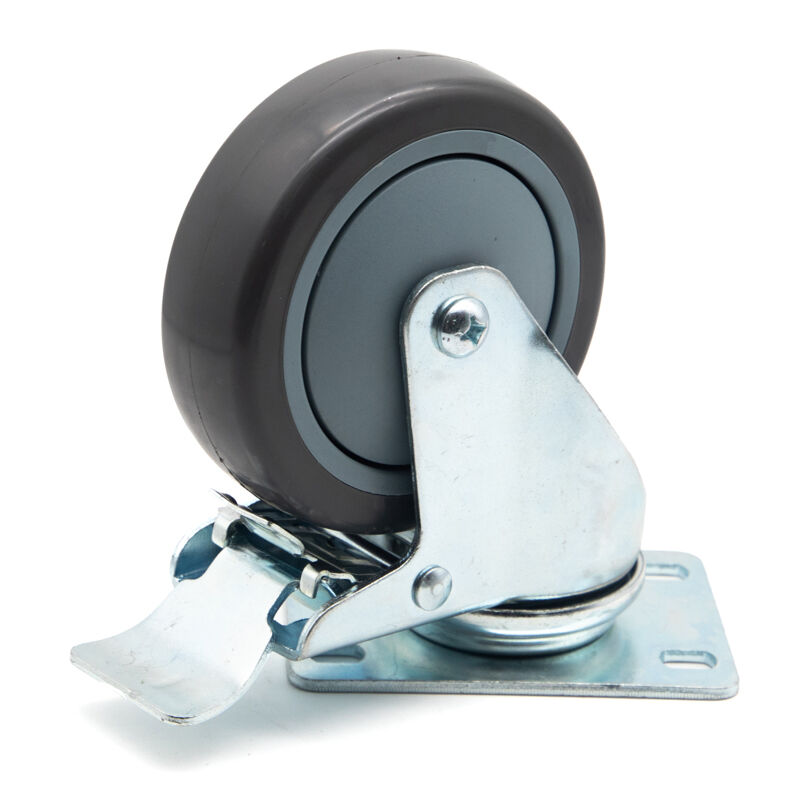
Why Swivel Wheels Fail in Harsh Industrial Environments
Chemical exposure, oil saturation, and abrasive debris as primary degradation vectors
Continuous contact with industrial solvents, oils, and airborne particulates progressively deteriorates swivel wheel integrity. Acids and alkalis degrade polyurethane treads, causing surface cracking that reduces shock absorption by up to 40%. Oil saturation triggers polymer swelling—diminishing traction and increasing slip incidents by 28%, per material fatigue studies. Simultaneously, abrasive contaminants like metal shavings, silica dust, or ceramic fragments act as grinding media within wheel bearings. This particulate ingress accelerates wear cycles by 3× compared to clean environments, embedding microscopically into raceways and intensifying friction. Together, these forces form a degradation triad: chemical corrosion weakens structural bonds, lubricant infiltration alters material properties, and abrasives mechanically erode load-bearing surfaces.
Floor irregularities and dynamic load shifts accelerating bearing and wheel wear
Uneven concrete joints, pitted surfaces, and debris-strewn pathways amplify stress concentrations during equipment movement. Each 1 mm floor irregularity generates impact forces exceeding static load ratings by 22%, transmitting shockwaves through wheel assemblies. Dynamic load shifts—occurring when materials settle unevenly during transport—create eccentric force vectors that strain kingpin connections. This misalignment distorts bearing contact patterns, raising localized temperatures by 60°F and accelerating lubricant breakdown. Over time, hardened steel components fatigue, manifesting as brinelling on bearing tracks and premature tread delamination. In high-traffic settings, these conditions reduce average swivel component lifespan from 18 months to under 7 months, per industrial maintenance benchmarks.
Material Selection Strategies for Durable Swivel Wheels
Stainless Steel vs. Forged Steel Swivel Wheel Housings: Balancing Corrosion Resistance and Impact Tolerance
Material choice directly dictates swivel wheel survival in corrosive settings. Stainless steel housings resist pitting from acids and chlorides—critical in food processing or marine environments—but may crack under sudden impacts exceeding 45,000 psi. Forged steel alternatives absorb 32% higher shock loads (ASM International, 2023) yet require powder-coating to prevent rust in humid conditions. Prioritize stainless for chemical exposure zones and forged steel for high-impact areas like foundries to avoid premature housing failure.
Polyurethane and Specialty Elastomer Wheels: Shore Hardness Optimization for Load, Traction, and Chemical Resilience
Selecting wheel compounds requires balancing Shore hardness (measured on the Shore A scale) against operational demands. Standard 85A polyurethane wheels support 600-lb dynamic loads quietly on smooth floors but degrade rapidly when exposed to oils or ketones. Specialty elastomers like nitrile rubber maintain flexibility at Shore 70A while resisting petroleum-based fluids. For abrasive debris zones, harder 95A wheels reduce wear by 40% (Tribology Transactions, 2022) but compromise traction. Match hardness to dominant hazards:
- High Shore hardness (90A–95A) for slag/gravel environments
- Mid-range (80A–85A) for balanced load/traction needs
- Chemical-resistant elastomers below 80A for oil-saturated floors
Engineering Swivel Wheels for Real-World Load and Environmental Demands
Dynamic load rating adjustments in oil-rich or corrosive settings (per ANSI/MHIA B151.1)
Standard dynamic load ratings require significant derating in oil-saturated or corrosive environments. Lubricant breakdown and accelerated bearing wear—common in petrochemical plants—demand load reductions of 20–30% versus dry conditions. Oil saturation compromises grease integrity, increasing friction by up to 40% (Material Handling Institute, 2023), while acids and solvents rapidly degrade wheel polymers. ANSI/MHIA B151.1 mandates environmental-specific derating factors to preserve safety margins. Key strategies include:
- Selecting nickel-plated bearings to resist chemical pitting
- Using polyurethane wheels with ≥95A Shore hardness for oil resistance
- Incorporating triple-lip seals to block slurry ingress
These adjustments prevent premature failures during high-speed turns or sudden stops. Always verify wheel ratings using manufacturer charts adjusted for your specific contaminant exposure levels.
Selecting and Maintaining Swivel Wheels for Long-Term Industrial Reliability
Optimal selection demands matching wheel material, load ratings, and environmental resilience to operational demands—a misalignment can accelerate failure by 300% in corrosive settings (ANSI/MHIA B151.1). Prioritize forged steel housings for impact resistance and polyurethane wheels (Shore 85A–95A) where chemical exposure occurs. Implement rigorous maintenance protocols: inspect bearings monthly for debris saturation, lubricate swivel mechanisms quarterly with high-temperature grease, and verify load distribution biannually. Facilities adhering to structured maintenance schedules report 70% longer service life by preventing abrasive particle ingress and load misalignment. Avoid exceeding dynamic load capacities—overloading remains the leading cause of premature kingpin failure.
FAQs
1. What causes swivel wheels to fail in industrial environments?
Swivel wheels fail due to chemical corrosion, oil saturation, abrasive debris, floor irregularities, and dynamic load shifts, which collectively weaken the material integrity and performance.
2. How do floor irregularities affect swivel wheels?
Floor irregularities increase stress concentrations, causing impact forces and shockwaves that damage bearings, kingpin connections, and wheel treads, shortening their lifespan.
3. What materials are best for swivel wheel housings in harsh environments?
Stainless steel is ideal for resisting corrosion, especially in chemical or marine environments, while forged steel is better for absorbing high-impact loads.
4. How do Shore hardness levels impact swivel wheel performance?
Higher Shore hardness levels (90A–95A) provide better resistance in abrasive environments, whereas mid-range levels (80A–85A) offer a balance of load and traction. Elastomers below 80A are suitable for oil-saturated conditions.
5. What are the best maintenance practices for swivel wheels?
Regular bearing inspections, quarterly lubrication, biannual load distribution checks, and adherence to load ratings can extend the lifespan of swivel wheels by preventing premature failures.


