 EN
EN
How 360-Degree Swivel Caster Wheels Enable True Omnidirectional Movement
Core mechanics: kingpin design, pivot axis, and swivel race geometry
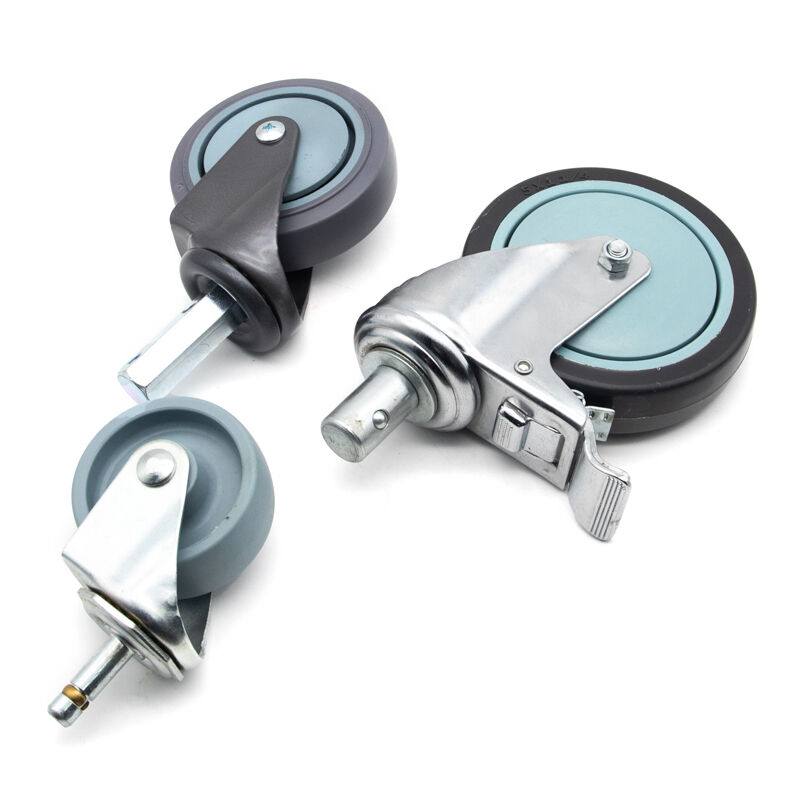
Getting true omnidirectional movement right depends on three main mechanical parts working together. At the heart of it all sits the kingpin, which is basically a precisely aligned vertical bolt acting as the central pivot point for the whole swivel mechanism. This allows wheels to turn freely in any direction without restrictions. Around the kingpin we find a hardened swivel race designed with just the right curve shape. This helps spread out stress from heavy loads across quality ball bearings, so there aren't those annoying friction points that cause premature wear. What makes this system really work well is how the pivot axis is positioned slightly off center. The wheel actually touches the ground a bit behind where it would normally rotate. This creates a mechanical advantage that cuts down on how much force someone needs to start moving things around. All these components combined mean no more struggling to manually adjust position when space gets tight, whether inside narrow warehouse storage areas or along hospital hallways where every inch counts.
Physics of low-friction rotation: bearing types, offset geometry, and load distribution
Friction reduction isn't just about picking the right materials but actually understanding how physics works in real applications. Tapered roller bearings create around 40% less contact with surfaces than regular bushings do, which means they generate far less resistance when things rotate. This makes sense if we think about basic tribology concepts. The way these bearings are positioned also matters a lot. Their special geometry basically acts like a mechanical advantage, cutting down on the force needed to start something moving by about half. When it comes to handling weight, there's an interesting pattern too. Dual row ball bearings don't really double their resistance even when weights go up. Tests show that doubling the load only increases resistance by about 15%. That explains why hospital equipment weighing over 500 kilograms can still turn corners easily in narrow hallways without scratching floors or getting stuck.
Real-World Applications of Swivel Caster Wheels in Constrained Environments
Warehouse logistics: navigating narrow aisles and dynamic pick zones
Swivel casters really boost productivity when working in tight warehouse spaces where every inch counts. These wheels can turn all directions, so carts don't need extra room to maneuver through narrow aisles less than six feet wide. That means warehouses can pack more inventory into the same footprint without making it harder to get things out. Warehouse staff love them especially in those busy picking areas where they constantly have to move goods around people and other equipment. Studies show workers end up walking about 40 percent less overall compared to using regular fixed wheels. The polyurethane material on these casters protects floors from damage while still handling weights well over 1,500 pounds each wheel. This makes them ideal for fast moving operations where automated equipment needs reliable mobility without damaging expensive flooring materials.
Healthcare & cleanroom mobility: sterile cart maneuverability in tight corridors
When it comes to hospitals and other controlled settings, we simply cannot afford situations where movement interferes with cleanliness, creates risks, or makes noise. The low profile swivel casters that sit below 3 inches tall actually work around those standard door thresholds pretty well. They also let IV poles turn completely around even when space is tight in hallways that aren't quite 36 inches wide. These casters have sealed stainless steel bearings inside them which stop tiny particles from getting loose, something that meets the strict ISO Class 5 to 7 standards for cleanrooms. There are special versions too that handle static electricity safely, keeping resistance levels right between 1 million and 1 billion ohms. What about the nylon wheels? They hold up really well after going through all those harsh chemical sterilizations again and again. This matters a lot because patients need to be moved quickly and safely between locations without equipment failing at critical moments.
Selecting the Right Swivel Caster Wheel: Load Capacity, Locking, and Profile Trade-Offs
High-capacity vs. low-profile swivel caster wheels: matching form to function
What works best really depends on what needs to be done. For applications requiring serious lifting power, manufacturers typically equip wheels with reinforced steel yokes and super thick polyurethane treads. These can handle over 1,000 pounds per wheel, making them great choices when moving heavy machinery around factories or supporting industrial platforms. On the flip side, there are low profile versions designed specifically for situations where space matters most. They need only about three inches of clearance beneath them thanks to smaller diameter wheels and those fancy precision ground bearings. Think medical equipment carts that have to squeeze through tight spaces in hospitals or fit under low hanging ceilings. There's always a compromise though. Wheels built for maximum strength tend to be bigger and heavier, which makes them more stable when dealing with uneven weights but harder to steer quickly. Slimmer designs offer better maneuverability but won't hold up to the same weight limits. When designing systems, engineers need to figure out the total weight being moved including both the equipment itself and whatever gets loaded onto it. Divide that number by how many wheels will share the load, then throw in an extra 25% just to be safe. This simple calculation helps prevent premature failures down the road.
Locking mechanisms: directional stability without sacrificing swivel responsiveness
Good locking mechanisms really make all the difference when it comes to maintaining accuracy while still being able to move things around easily. Total lock systems basically stop both wheel rotation and swivel movement at once, which works great for workstations that need to stay put. Then there are directional locks that turn those normally spinning casters into fixed units, giving much better stability when moving equipment in straight lines or aligning components. Some of the newer automatic brake systems only kick in when they sense weight, so they help prevent accidents especially in hospitals and clinics where safety is critical. The best dual function mechanisms keep less than one degree of swivel resistance when unlocked, meaning surgical carts or assembly tables can switch from completely stable positions to smooth multidirectional movement almost instantly. Well designed systems spread out the braking force evenly across the entire swivel mechanism, preventing damage to bearings even after long periods of heavy use.
Swivel Caster Wheels vs. Rigid Casters: When to Choose Each for Optimal Performance
Swivel and rigid casters do different jobs when it comes to moving things around, and neither one can claim to be better in every situation. Swivel casters spin all the way around on their vertical axis, so they let equipment change direction quickly even in tight spaces where there are lots of obstacles, such as those busy hospital hallways or cramped warehouse passages. On the other hand, rigid casters just roll straight ahead and back, giving much better stability when going in a straight line. They also tend to handle about 20 to 30 percent more weight than swivels, which is why they work so well on loading docks or along conveyor belts in manufacturing plants.
Key decision factors include:
- Maneuverability needs: Frequent turns favor swivel casters
- Load profile: Heavy, steady loads often suit rigid configurations
- Movement patterns: Hybrid setups (swivel front, rigid rear) combine steering agility with tracking stability
- Floor preservation: Swivel designs distribute rotational stress more evenly; rigid casters minimize lateral scrubbing during linear motion
When moving heavy loads over long distances where conditions are fairly consistent, rigid casters tend to be more energy efficient and need less frequent maintenance. Smaller machines working in tight spaces with lots of obstacles, like those used in hospital settings or warehouse picking operations, really benefit from swivel casters instead. These allow operators to maneuver around corners and through narrow aisles much easier. According to various industry reports, making smart choices about which type of caster to use can cut down on the physical effort needed for pushing or pulling equipment by roughly 40 percent. Plus, wheels last about twice to three times longer when matched correctly to their intended application.
FAQ
What is a kingpin in a swivel caster wheel?
A kingpin is a precisely aligned vertical bolt acting as the central pivot point within the swivel mechanism, allowing the wheel to rotate freely in any direction.
How do swivel caster wheels benefit warehouse logistics?
Swivel casters allow carts to turn in all directions, enabling maneuvering in narrow aisles and increasing warehouse productivity by reducing the space required for movement.
Why are low-profile swivel casters beneficial in healthcare environments?
Low-profile swivel casters allow for improved maneuverability in tight corridors, meet cleanliness standards, and ensure safe transportation of medical equipment without failure.
How do locking mechanisms improve swivel caster wheel performance?
Locking mechanisms provide directional stability by halting wheel rotation and swivel movement, essential for maintaining positional accuracy while allowing easy movement when needed.
When should I choose swivel casters over rigid casters?
Swivel casters are best for environments requiring frequent directional changes and maneuverability in tight spaces, while rigid casters suit heavy loads and straight-line stability.
Table of Contents
- How 360-Degree Swivel Caster Wheels Enable True Omnidirectional Movement
- Real-World Applications of Swivel Caster Wheels in Constrained Environments
- Selecting the Right Swivel Caster Wheel: Load Capacity, Locking, and Profile Trade-Offs
- Swivel Caster Wheels vs. Rigid Casters: When to Choose Each for Optimal Performance
- FAQ


