
 EN
EN
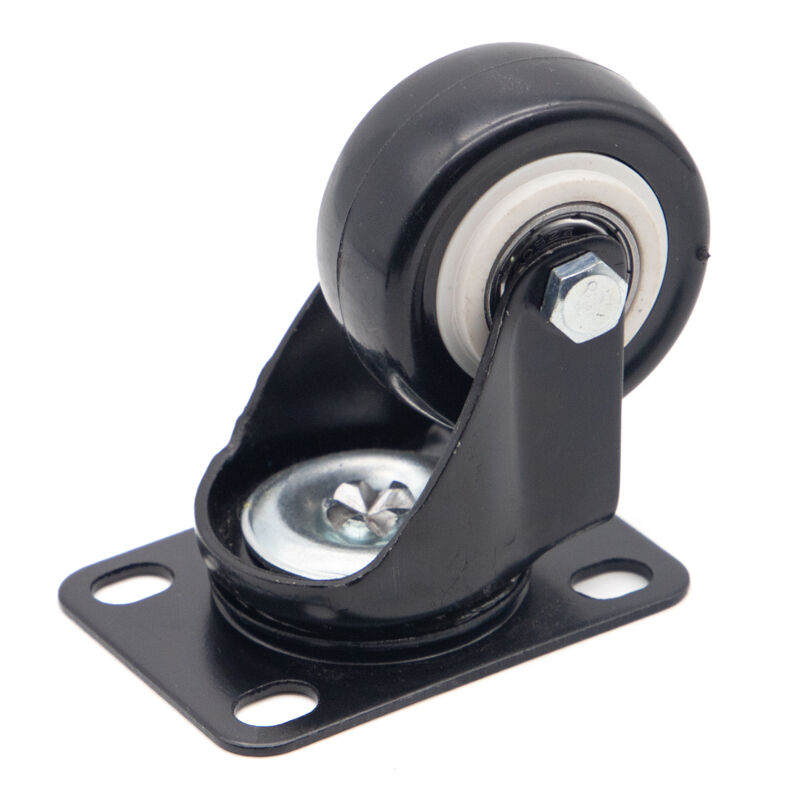
Why Load-Bearing Capacity Is the Foundational Specification for Cart Wheels
Exceeding a wheel’s load-bearing capacity accelerates failure, increasing downtime costs by up to $740k (Ponemon 2023). Logistics carts face uneven weight distribution during turns or on sloped surfaces—concentrating over 70% of stress on individual wheels. This dynamic force far exceeds static weight benchmarks, demanding a 25–30% safety margin above maximum operational loads. Without it, overloaded wheels deform, fracture treads, or shear axles—compromising safety and productivity. Leading manufacturers validate load ratings through ANSI/ITSDF B56.1 drop tests, simulating real-world impacts from obstacles like dock plates. Choosing wheels below required capacity risks equipment damage, floor scarring, and worker injuries. Always prioritize dynamic load ratings—not static specs—to account for operational stresses.
How to Accurately Calculate Required Load-Bearing Capacity for Multi-Wheel Logistics Carts
Accurate load capacity calculation prevents wheel failure and operational hazards. The formula must account for total weight distribution, safety buffers, and dynamic derating.
The Core Formula: Total Load Distribution, Safety Margin (25–30%), and Dynamic Derating (0.75 Factor)
First, sum your cart’s maximum operational weight—including payload and equipment deadweight. For multi-wheel systems, divide this total by the number of wheels minus one (e.g., three wheels for a four-wheel cart), since uneven floors often leave one wheel unloaded. Then apply a 30% safety margin for impacts and overloads. Finally, multiply by a 0.75 derating factor to compensate for speed, obstacles, and momentum. The equation is:
Per-wheel capacity = [(Total load ÷ (Wheels − 1)) × 1.3] × 0.75
For example:
- 2,000 lb total load on a four-wheel cart
- Base capacity: 2,000 ÷ 3 = 667 lbs
- With 30% safety margin: 667 × 1.3 = 867 lbs
- After derating: 867 × 0.75 = 650 lbs required per wheel
Compliance as Minimum Standard: ANSI/ITSDF B56.1 and ISO 22883 Requirements for Cart Wheels
Industry standards like ANSI/ITSDF B56.1 and ISO 22883 establish baseline safety protocols—mandating load testing at 150% of rated capacity, material durability thresholds for polyurethane, rubber, and steel variants, and performance validation across temperature extremes (−22°F to +140°F). Compliance certifies wheels meet minimum dynamic stress tolerances but does not replace site-specific derating calculations. These standards serve as essential guardrails—not operational substitutes.
Matching Cart Wheels to Operational Realities: Material, Environment, and Hidden Derating Factors
Material Trade-Offs: Polyurethane vs Rubber vs Steel Cart Wheels Under Load and Environmental Stress
Selecting wheel materials requires balancing load demands against environmental stressors. Polyurethane offers superior floor protection and quiet operation—ideal for warehouses—but derates 20% in chemical-rich environments. Rubber provides excellent shock absorption on uneven floors yet loses 30% load capacity above 140°F due to softening—critical in foundries or commercial kitchens. Steel wheels maintain 95% load integrity across extreme temperatures but transmit vibrations, increasing ergonomic risk by 18% (Darcor 2016). In refrigerated facilities (−20°F), polyurethane’s cold-crack resistance outperforms rubber’s brittle failure point.
Critical Derating Influences: Floor Surface Integrity, Speed, Obstacles, and Temperature Effects on Cart Wheels
Operational factors silently degrade wheel performance:
- Floor roughness increases rolling resistance by 40% on cracked concrete, requiring 15% load derating
- Speeds >4 mph generate heat friction, slashing polyurethane’s lifespan by half
- Obstacle impacts, such as dock plates, create instantaneous loads up to 3× static weight—necessitating 25% safety margins
- Temperature swings alter material behavior: rubber hardens below 32°F (reducing traction by 35%), while steel bearings risk overheating above 200°F
Ignoring these variables risks premature wheel collapse—especially in multi-shift logistics operations where carts routinely travel 15+ miles daily.
FAQ
What is the significance of dynamic load ratings for cart wheels?
Dynamic load ratings account for the operational stresses that carts experience, such as uneven weight distribution, impacts, and motion. Choosing wheels based solely on static load ratings may lead to safety hazards and premature wheel failure.
How do I calculate the required load-bearing capacity for multi-wheel carts?
Use the formula: Per-wheel capacity = [(Total load ÷ (Wheels − 1)) × 1.3] × 0.75. This accounts for weight distribution, safety margins, and dynamic derating.
What materials are best for cart wheels in different environments?
The choice depends on specific conditions: Polyurethane for silent operation and floor protection, rubber for shock absorption, and steel for extreme temperatures. Each has strengths and weaknesses under varying stresses.
Why do industry standards like ANSI/ITSDF B56.1 matter?
These standards ensure wheels meet minimum safety, durability, and performance criteria, but they should complement, not replace, site-specific calculations and assessments.


