
 EN
EN
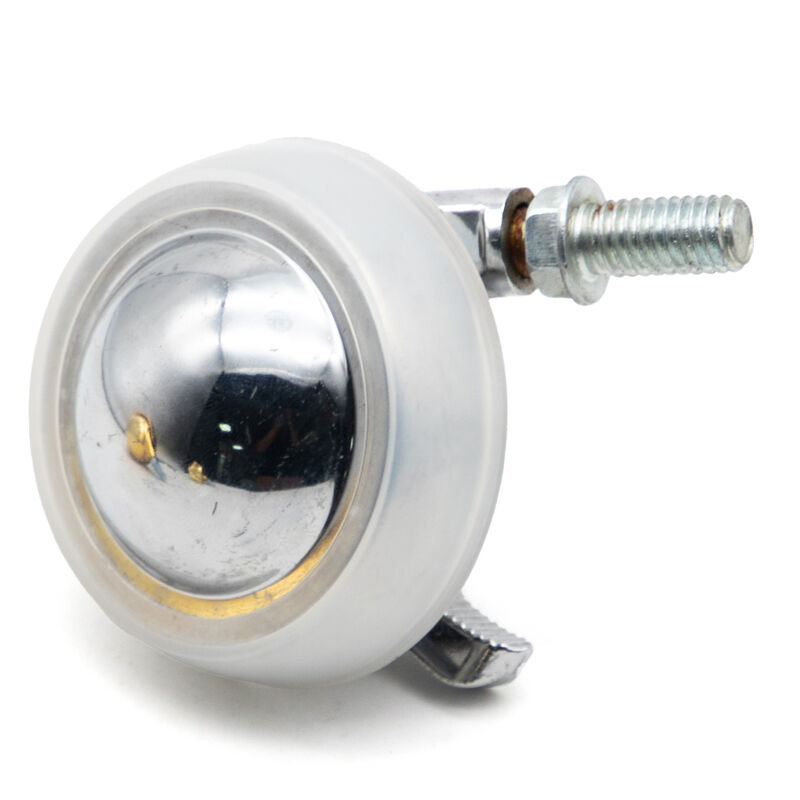
Load Capacity Essentials for Heavy-Duty Furniture Wheels
Static vs. Dynamic Load Ratings: What They Mean for Real-World Stability
Heavy-duty furniture wheels are defined by two distinct load ratings: static and dynamic. Static load refers to the maximum weight a stationary wheel can support without permanent deformation; dynamic load reflects its safe capacity while rolling. In real-world industrial use, dynamic ratings typically drop to just 20–25% of static values—a critical gap often overlooked (MHI 2024). For example, a caster rated for 1,000 lbs static may safely carry only 250 lbs during movement. Relying solely on static ratings invites instability, premature wear, or catastrophic failure. Always prioritize dynamic load capacity aligned with your furniture’s operational weight.
Why Total Wheel Count and Load Distribution Matter More Than Single-Wheel Ratings
A single-wheel rating is irrelevant without context—system-level capacity depends on total wheel count and how weight is distributed across them. Divide your furniture’s fully loaded weight by the number of wheels, then apply a minimum 30% safety margin. For instance, a 1,200-lb cabinet on four wheels requires each caster to handle at least 390 lbs (1,200 ÷ 4 × 1.3). But uneven loading—especially in corner-heavy or asymmetrical units—can place disproportionate stress on individual casters, demanding up to 50% higher per-wheel capacity than calculated. Always verify actual load distribution across all contact points before finalizing specifications.
Material and Construction: Balancing Durability, Floor Protection, and Load Handling
Polyurethane, Nylon, and Rubber—Comparing Performance on Hardwood, Tile, and Carpet
Material choice directly affects floor protection, rolling efficiency, and load resilience. Polyurethane delivers the strongest balance: high abrasion resistance, moderate elasticity, and consistent performance across hardwood, tile, and low-pile carpet—making it ideal for multi-surface environments. Nylon offers exceptional strength and wear resistance but poses a high risk of scratching hardwood and glazed tile due to its rigidity. Rubber excels in noise reduction and carpet traction yet degrades faster under sustained heavy loads.
| Material | Floor Protection Strength | Optimal Load Suitability |
|---|---|---|
| Polyurethane | High (all surfaces) | Best for multi-floor furniture |
| Nylon | Low (risks hardwood) | Heavy static industrial units |
| Rubber | Medium (ideal for carpet) | Moderate-weight mobile items |
Hardwood floors require softer compounds to avoid gouging; tile demands chemical resistance against cleaning agents; and carpet benefits from wider wheel profiles that distribute pressure and prevent pile compression—key to preserving both flooring and wheel longevity.
Reinforced Cores and Stainless Steel Housings in Premium Furniture Wheels
Top-tier wheels overcome material limitations through engineered construction. Fiber-reinforced polyurethane cores resist deformation under loads exceeding 1,000 lbs—maintaining shape where standard formulations flatten. Stainless steel housings eliminate corrosion in humid or chemically exposed settings like medical facilities and commercial kitchens. Paired with precision ball bearings, these features ensure smooth swiveling and extended service life. ASTM B117 salt-spray testing confirms stainless steel housings reduce maintenance frequency by 70% versus zinc-plated alternatives—proving essential for institutional applications where wheel failure presents measurable safety risks.
Size and Geometry: How Diameter, Width, and Profile Affect Mobility and Control
Optimal 4–6 Inch Diameters for Reducing Rolling Resistance on Bulky Furniture
Wheel diameter is a primary determinant of rolling effort. Larger diameters significantly reduce resistance: a 5-inch wheel requires roughly 30% less force to initiate movement than a 3-inch counterpart under identical loads. This stems from physics—the larger lever arm decreases required input energy while distributing weight more evenly and minimizing point-pressure damage to floors. For bulky, high-mass furniture like industrial shelving or medical cabinets, 4–6 inch diameters deliver the optimal trade-off: sufficient ground clearance to traverse minor thresholds or imperfections, low center-of-gravity stability, and manageable maneuverability in confined spaces. Diameters beyond 6 inches compromise agility in tight layouts; those below 4 inches increase user strain and raise flooring damage risk.
Mounting and Integration: Ensuring Structural Integrity with Furniture Frames
Plate-Mount vs. Stem-Mount Casters—Compatibility, Load Transfer, and Installation Simplicity
Mounting method dictates how effectively load transfers from furniture to wheel—and how well the frame withstands that stress. Plate-mount casters spread force over a broad surface (typically 3"x4" to 4"x5") via multiple fasteners, making them ideal for particleboard, MDF, or other engineered substrates vulnerable to point-load cracking. Stem-mount variants insert directly into tubular legs using grip rings or expandable stems—enabling quick, tool-free installation—but concentrate stress at a single junction. For solid-wood frames supporting over 800 lbs, welded steel plate mounts with thru-bolt reinforcement prevent housing separation under peak load. Modular shelving gains flexibility from stem mounts’ full 360° rotation, though adapter sleeves may be needed for non-standard leg diameters. Match fastener count, plate thickness, and mounting geometry precisely to your furniture’s weight concentration zones.
Mobility Configuration: Swivel, Rigid, and Locking Systems for Safety and Precision
Dual-Wheel Swivel Assemblies and Center-Lock Mechanisms for High-Mass Units
For furniture exceeding 1,000 lbs, dual-wheel swivel assemblies dramatically improve performance: four contact points instead of two cut rolling resistance by up to 40% while retaining full 360° maneuverability. Crucially, center-lock mechanisms engage both wheel rotation and swivel motion simultaneously—preventing dangerous pivot-and-roll incidents common with single-point brakes, especially on sloped or uneven surfaces. When specifying heavy-duty systems, prioritize configurations where:
- Swivel casters incorporate precision ball bearings for smooth, controlled directional changes
- Locking systems use vertically engaged pins engineered to resist lateral forces
- Load distribution aligns with the unit’s center of gravity
This integrated approach ensures precise positioning, reliable stability, and safe mobility—even during frequent relocation of high-mass equipment.
FAQ
What is the difference between static and dynamic load ratings?
Static load refers to the weight a stationary wheel can support without permanent damage, while dynamic load refers to the weight a wheel can safely carry while rolling.
How do I calculate the load capacity per wheel for my furniture?
Divide the total weight of your furniture by the number of wheels and add a 30-50% safety margin to account for uneven weight distribution.
Which material is best for multi-surface environments?
Polyurethane is ideal for multi-surface environments due to its high abrasion resistance, moderate elasticity, and consistent performance across various surfaces.
What wheel diameters are best for heavy furniture?
Diameters between 4–6 inches are optimal for reducing rolling resistance, ensuring mobility, and protecting floors for heavy furniture.
What mounting option is better for heavy loads?
Plate-mount casters are better for heavy loads as they distribute force over a larger area, reducing the risk of frame damage.
Table of Contents
- Load Capacity Essentials for Heavy-Duty Furniture Wheels
- Material and Construction: Balancing Durability, Floor Protection, and Load Handling
- Size and Geometry: How Diameter, Width, and Profile Affect Mobility and Control
- Mounting and Integration: Ensuring Structural Integrity with Furniture Frames
- Mobility Configuration: Swivel, Rigid, and Locking Systems for Safety and Precision
- FAQ


