
 EN
EN
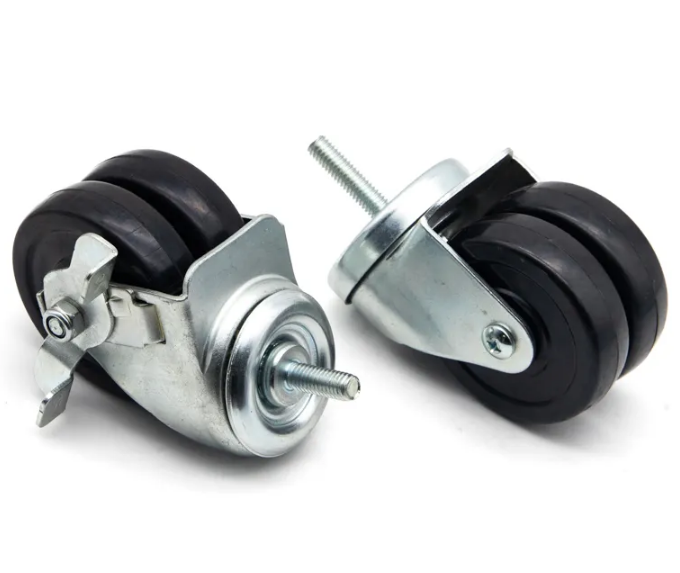
The Hardwood Floor Challenge: Why Small Caster Wheels Are a Strategic Solution
Hardwood floors combine elegance with durability—but they’re vulnerable to scratches, dents, and scuffs from heavy furniture or equipment movement. The wrong wheel can mar the surface, leaving permanent damage that’s costly to repair. Small caster wheels (2 to 4 inches in diameter) offer a strategic solution. Unlike larger wheels that roll over obstacles but struggle in tight spaces, small casters excel on smooth, clean hardwood. Their compact size reduces torque and lateral scrubbing, minimizing friction against the floor. When paired with soft polyurethane treads, they cushion the load, distribute weight evenly, and prevent the hard contact that causes scratches. They also improve maneuverability in confined areas—an essential factor for office furniture, display carts, or medical equipment. By selecting the right diameter and material, facilities protect their hardwood investment while maintaining seamless mobility.
Why Soft Polyurethane Is the Optimal Material for Small Caster Wheels on Hardwood
Soft polyurethane (PU) combines durability with floor-safe properties, making it the preferred tread material for small caster wheels on hardwood. Unlike hard plastics or untreated rubber, PU offers a unique balance of flexibility and strength that directly addresses the two biggest risks to hardwood: impact damage and chemical staining. Its closed-cell structure resists moisture absorption and prevents rubber degradation over time.
Load Distribution and Shock Absorption: How PU Treads Prevent Dents and Scratches
When a small caster wheel rolls under load, the soft PU tread compresses slightly, increasing the contact area. This distributes weight across a larger surface, reducing point pressure that would otherwise dent or scratch hardwood. The elastomeric nature of polyurethane also absorbs shock from uneven transitions or quick stops—preventing sudden gouges. Because PU has lower rolling resistance than many alternatives, the wheel glides smoothly without jerky movements that cause lateral scratching.
Non-Marking Chemistry: PU’s Resistance to Tannin Bleed, Adhesive Transfer, and Staining
Polyurethane’s chemical stability prevents the two main staining threats on hardwood. First, it does not react with natural tannins found in wood, so no dark bleed marks appear under prolonged contact. Second, PU treads shed adhesive residue from floor finishes or cleaning products, unlike some soft rubbers that bond with sealants. Its non-marking formulation ensures no black scuff marks or color transfer—even after thousands of rotations on light-colored hardwood. This combination of shock absorption and inert chemistry makes small caster wheels with PU treads a long-term safe choice for delicate floors.
Size Matters: The Performance Benefits of 1.5"–3" Small Caster Wheels
The 1.5- to 3-inch diameter range represents a sweet spot for applications requiring both agility and surface protection. These small caster wheels accelerate quickly and navigate tight corners easily, reducing the need for excessive force that could damage hardwood. Because the wheel’s moment arm is shorter, operators experience less resistance when turning—decreasing lateral stress on the floor. The compact size also lowers the overall weight and momentum of the caster assembly, minimizing impact force when moving over thresholds or uneven planks. These characteristics make 1.5–3 inch casters ideal for retail displays, hospital carts, and office furniture where hardwood floors are common.
Reduced Torque and Lateral Scrubbing: Physics Behind Gentle Hardwood Interaction
Torque—the rotational force needed to start and maintain wheel motion—is reduced with a smaller radius due to a shorter lever arm. That means less initial jerk, which lowers the risk of scratches. Lateral scrubbing occurs when a wheel is pushed sideways while rotating, creating friction that mars floors. Small casters generate less lateral force because their limited diameter provides less leverage for sideways motion. Additionally, the smaller contact patch lowers adhesion, further reducing scuffing risk. The low inertia of a 2-inch wheel also enables rapid acceleration and deceleration—shortening the time during which scrubbing can occur. Together, these physics principles explain why small caster wheels are a safe, high-performance choice for hardwood.
Real-World Validation: Proven Floor Protection and Operational Gains
Small caster wheels with soft polyurethane treads deliver measurable benefits beyond theory—facilities report up to 40% lower floor maintenance costs and extended hardwood lifespan after adoption. The physics of reduced contact pressure and non-marking chemistry directly translate to preserved aesthetics and fewer refinishing cycles.
Case Study: 92% Reduction in Hardwood Scratches After Adopting 2" PU Casters
A logistics warehouse replaced standard nylon casters with 2" polyurethane wheels on all equipment carts, tracking scratch incidence across 12 months. The soft treads distributed loads evenly and absorbed impacts that previously dented maple floors. Simultaneously, PU’s inert chemistry prevented adhesive residue and tannin bleed marks common with rubber alternatives. Post-implementation audits revealed a 92% drop in new scratches—alongside unexpected gains: 18% faster cart maneuverability in tight aisles and 35% less downtime for floor repairs. This validates how small caster wheels optimize both protection and workflow efficiency.


