
 EN
EN
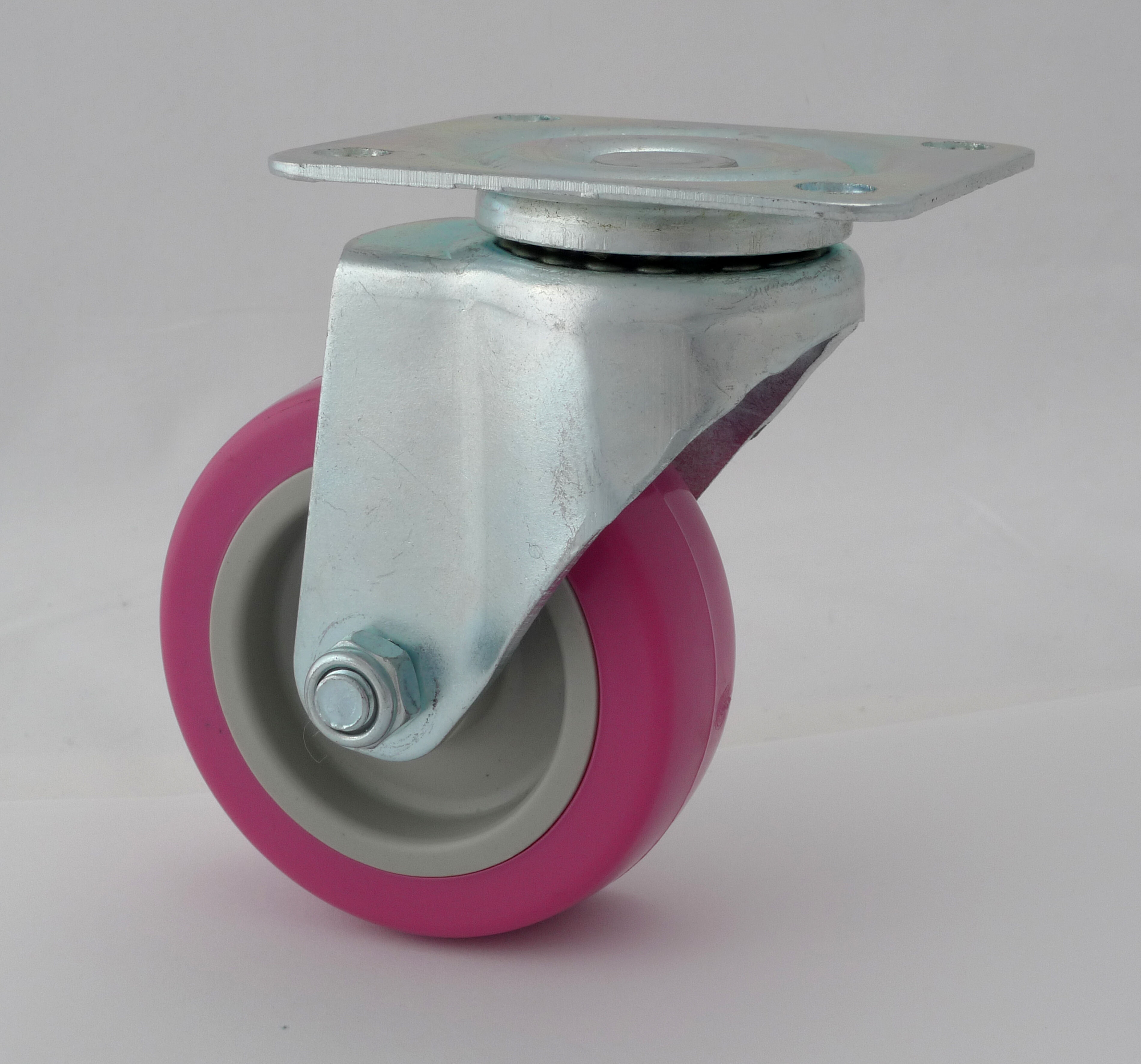
How Swivel Wheel Diameter Affects Rollability, Load Capacity, and Obstacle Clearance
Rollability vs. Diameter: Why 3" to 8" Swivel Wheels Suit Different Mobility Needs
The size of swivel wheels really affects how easy they roll around. When we talk about bigger wheels, say between 6 inches to 8 inches, these generally make rolling easier because they cut down on resistance. Each extra inch seems to make things smoother by about 10%, so bigger wheels handle rough spots, cracks, and bumpy floors much better than smaller ones. On the flip side, those tiny 3 inch to 4 inch wheels are all about making sharp turns and staying low to the ground. They work great for stuff like store displays, hospital equipment carts, or anywhere there's limited space between shelves. Warehouse forklifts typically need those larger 8 inch wheels when working on flat concrete floors, while the 3 inch models shine in situations where getting through tight spaces matters more than just rolling smoothly from point A to B.
Load Capacity Limits: How Larger Swivel Wheels Improve Distribution−But Introduce Stability Trade-Offs
Bigger swivel wheels spread out weight better, which means they can handle more static load. Take it from experience - an 8 inch wheel will generally support about 30 percent more weight compared to something smaller like a 4 inch version when rolling over hard surfaces. But there's always a catch. When we go for larger diameters, the whole setup gets taller and the center of gravity moves up, making things less stable sideways. Every extra two inches added to the wheel size seems to cut cornering stability down roughly 15%, increasing the chances of tipping over during those tricky turns or sudden stops. Some folks try reinforcing the hubs or going for wider treads to counteract this effect, but at the end of the day, there's still that basic problem everyone faces: getting more carrying power usually comes at the expense of stability when moving around, especially when accelerating quickly or coming to a halt.
Threshold & Floor Transition Clearance: Selecting Swivel Wheel Height for Seamless Indoor/Outdoor Use
The ability to clear obstacles is closely tied to wheel size. Most experts suggest going with at least 5 inch wheels if someone wants to get over those standard half inch thresholds without getting stuck or bouncing around. Going smaller than that, like 3 to 4 inches, really makes things harder work when moving between different surfaces according to studies done in material handling fields. When dealing with varied terrain such as expansion joints, grating covered paths, or uneven outdoor paving stones, bigger wheels make all the difference. Wheels measuring 6 to 8 inches give roughly three quarters to one inch extra space from the ground. Experience shows that every additional inch added to wheel diameter boosts the capacity to handle obstacles by about 18 percent. That's why picking the right wheel size matters so much for maintaining smooth movement without causing unnecessary strain.
Maneuverability vs. Stability: Key Trade-Offs in Swivel Wheel Selection
Swivel Radius and Caster Offset: Engineering Balance Between Tight Turning and Straight-Line Tracking
Designing swivel wheels means finding the sweet spot between being able to turn quickly and maintaining good stability when moving. Let's talk about the swivel radius first. This is basically how far the wheel sits from where it pivots. Wheels with smaller radii can make really tight turns which is great in cramped areas, but they tend to be less stable when carrying heavier loads. Then there's caster offset, which measures the space between the pivot point and the actual wheel axle. When this distance increases, it makes the wheel easier to swivel around, but might cause some annoying wobbling when going fast or pulling something heavy. On the flip side, keeping the offset minimal helps things move straighter, which matters a lot for big industrial machinery. For stuff like hospital gurneys or hotel carts though, manufacturers usually go with bigger offsets because these applications need quick direction changes. Getting this right requires looking at factors like what kind of weight the cart will carry, how fast it needs to go, and where exactly it'll be used day to day.
Surface Compatibility: Matching Swivel Wheel Tread and Diameter to Carpet, Grating, Concrete, and Uneven Floors
Floor type dictates optimal wheel specifications. Larger diameters (6"–8") bridge gaps in grating or outdoor pavers but may compromise low-clearance applications. Smaller diameters (3"–4") glide efficiently on smooth interiors but stall on debris or carpet pile. Tread material is equally decisive:
- Soft rubber delivers high grip on carpet and vibration damping on concrete
- Polyurethane offers chemical resistance and floor protection for warehouses
-
Pneumatic treads absorb shocks on gravel, grass, or cracked pavement
Mismatched wheels increase push force by up to 40% on rough surfaces, per industrial testing. Prioritize wider treads for load spread on delicate floors (e.g., vinyl), and narrower profiles where precision maneuvering matters most.
Performance-Defining Technical Features of Swivel Wheels
Bearing Type Comparison: Ball, Roller, and Plain Bearings for Dynamic Loads on Swivel Wheels
The right bearing choice makes all the difference when dealing with moving parts and changing forces. Ball bearings cut down on spinning resistance quite a bit, which means they can handle speeds around 20% faster than other types. That's why engineers often pick them for things that need to spin quickly without much drag. Roller bearings are better suited for absorbing sudden impacts and shocks. Tests show they reduce damage risks by roughly 37% compared to simple bushings when weights go over 500 pounds. For really heavy stationary loads where money matters most, plain bearings or bushings work fine. But these need constant greasing especially if dirt gets into the mix. They just don't last as long when hit repeatedly though, so maintenance becomes a bigger concern in those situations.
Wheel Width and Material Impact on Load Spread, Vibration Dampening, and Floor Protection
Width dramatically influences pressure distribution: a 4" wide wheel reduces floor contact pressure by 60% compared to a 2" model under identical loads, per ASTM F1574-22. Material choice further defines functional behavior:
- Polyurethane combines non-marking properties with superior vibration absorption−damping 15 dB more noise than metal wheels−making it ideal for labs and hospitals
- Nylon resists solvents and corrosion but transmits more vibration to sensitive equipment
-
Rubber maximizes shock absorption on uneven terrain yet degrades faster under UV exposure
For delicate flooring, polyurethane wheels ⩾3" wide prevent indentation while preserving full 360° maneuverability.
Practical Sizing Framework: Calculating Required Swivel Wheel Size by Equipment Load and Application
Step-by-Step Load Capacity Calculation: Accounting for Swivel Configuration, Safety Factor, and Real-World Weight Distribution
Getting accurate sizing right means dealing with three main factors that show up in real applications: how weight gets distributed across the machine, the stress it experiences while moving around, and those little losses that happen because of how swivels work mechanically. Start off by figuring out what the whole piece weighs and where most of that weight tends to sit. Industrial gear typically puts about 60 to 70 percent of its bulk on just those front corners, which is why we see so many problems there. Take the total weight and divide it among all the wheels, but don't stop there. Multiply that number by something between 1.2 and 1.5 since nothing ever sits perfectly balanced in practice. Then throw in a safety buffer somewhere between 1.5 and 2 times bigger than what calculations suggest, just to handle all those unexpected bumps, shakes, and emergency stops nobody plans for. And remember, swivel casters can only take about 80 to 85 percent of what their non-swiveling counterparts can handle because of how complex those pivoting parts are. So after applying all those safety numbers, go ahead and bump them up another 20 percent to give ourselves some breathing room when things get rough on site.
| Calculation Phase | Formula | 1,000 lb Equipment Example |
|---|---|---|
| Nominal Load | Total Weight ÷ Wheel Count | 1,000 ÷ 4 = 250 lbs/wheel |
| Distribution Adjustment | Nominal Load × Distribution Factor (1.5) | 250 × 1.5 = 375 lbs |
| Safety Margin | Adjusted Load × Safety Factor (2.0) | 375 × 2.0 = 750 lbs |
| Swivel Reduction | Load with Safety × 1.2 (20% buffer) | 750 × 1.2 = 900 lbs |
Always select wheels rated at least 20–30% above this final value—and verify against manufacturer load tables, which reflect real-world test conditions including floor flatness, temperature, and duty cycle.
FAQs about Swivel Wheels
What size swivel wheel is best for smooth rolling?
Larger swivel wheels, typically between 6 to 8 inches, are best for smoother rolling as they reduce resistance by roughly 10% and handle uneven surfaces better.
How does wheel diameter affect load capacity?
Bigger wheels can support more weight due to better weight distribution but may compromise stability by raising the center of gravity.
Can swivel wheels clear obstacles effectively?
Yes, larger wheels provide better clearance for obstacles. Experts recommend at least 5-inch diameter wheels for seamless indoor/outdoor transitions.
Table of Contents
- How Swivel Wheel Diameter Affects Rollability, Load Capacity, and Obstacle Clearance
- Maneuverability vs. Stability: Key Trade-Offs in Swivel Wheel Selection
- Performance-Defining Technical Features of Swivel Wheels
- Practical Sizing Framework: Calculating Required Swivel Wheel Size by Equipment Load and Application
- FAQs about Swivel Wheels


