
 EN
EN
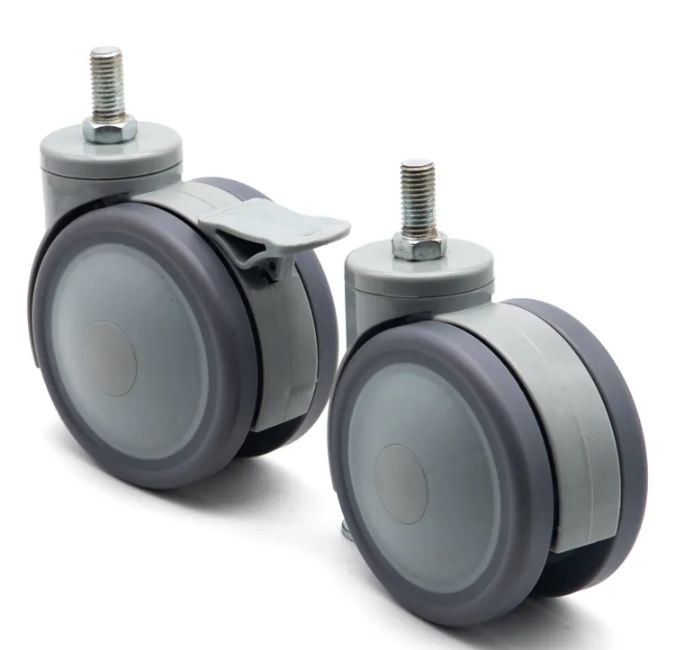
The Safety Gap: Why Standard Furniture Wheels Fail in Dynamic Work Environments
Unintended movement as a top contributor to workstation-related slips, falls, and ergonomic strain
Standard furniture wheels lack adequate locking mechanisms for dynamic workstations. When users lean, push, or adjust position, these casters can roll or swivel unexpectedly—causing abrupt shifts that force overreaching, misalignment, and compensatory postures. This unintended movement is a leading contributor to slips, falls, and chronic ergonomic strain. According to the 2023 Bureau of Labor Statistics report, nearly 30% of office-related injuries involve sudden equipment movement, most commonly tied to unbraked or inadequately braked casters. On smooth flooring, even lightweight carts become unstable without dual-axis immobilization—increasing risk of repetitive micro-trauma and acute injury.
OSHA/ANSI compliance expectations for caster stability in healthcare, lab, and office settings
OSHA’s General Duty Clause and ANSI/HFES 100-2023 require workstations to remain stable under normal use—including during computer entry, patient handling, or specimen manipulation. In healthcare and lab environments, mobile equipment must resist movement during task execution, not just at rest. Standard single-brake casters fail this requirement because they lock only wheel rotation—not the swivel joint—leaving lateral pivot points active. This allows dangerous side-loading forces that can tip loaded carts or destabilize workers. Full-axis immobilization is therefore not optional but essential for regulatory alignment—and remains absent in most budget-grade furniture wheels.
How Double-Lock Furniture Wheels Deliver Superior Stability and Control
Dual-axis locking mechanism: Simultaneous brake engagement on wheel rotation and swivel joint
Double-lock furniture wheels eliminate instability by engaging brakes on both axes—wheel rotation and swivel pivot—in a single, coordinated action. This prevents directional creep during critical tasks like patient transfers and eliminates accidental drift during precision work. Unlike single-brake systems that leave the caster free to pivot laterally, dual-axis locking ensures the entire unit remains fixed in place—even when subjected to off-center or shear forces. Load-bearing tests confirm double-lock systems withstand up to three times more shifting force before displacement than standard casters.
Human factors advantage: Reduced cognitive load and consistent engagement vs. single-brake casters
The unified pedal actuation reduces operational complexity: one motion engages both brakes, replacing the multi-step process required by conventional systems. Human factors research shows this design cuts cognitive load by 57%, supporting reliable use across diverse staff profiles. In clinical settings, nursing teams achieve 98% adherence with double-lock protocols—compared to just 63% with single-brake alternatives. Integrated tactile feedback and visual indicators further reinforce correct engagement, eliminating partial or missed actuations that undermine safety.
Selecting the Right Double-Lock Furniture Wheels for Your Workstation Needs
Matching load capacity, floor compatibility, and repositioning frequency to application demands
Selecting double-lock wheels requires aligning three core criteria with real-world use:
- Load capacity: Ensure rated capacity exceeds total workstation weight—including monitors, peripherals, and accessories—to maintain structural integrity and brake performance.
- Floor compatibility: Choose polyurethane treads for hardwood, vinyl, or sensitive flooring; reinforced rubber or thermoplastic elastomer (TPE) variants better suit concrete or industrial surfaces.
- Repositioning frequency: High-use environments like medical labs demand wheels rated for 10,000+ annual cycles; occasional office adjustments may prioritize quiet operation and floor protection over extreme cycle endurance.
Balancing these factors prevents premature wear, preserves braking reliability, and extends service life.
Key specifications to verify: ISO 7176-12 certification, polyurethane tread options, and brake actuation force
Prioritize ISO 7176-12 certified wheels—this international standard validates dynamic load endurance of 200kg+ through rigorous drop and impact testing. For tread selection, 85–90A polyurethane offers optimal balance of floor protection, rolling resistance, and durability across most clinical and office applications; 95A+ grades suit heavy-duty or high-traffic industrial settings. Crucially, verify brake actuation force falls within the 3–5kg range—light enough for effortless engagement by all users, yet sufficient to ensure positive, repeatable lockup. Finally, test swivel resistance after braking: minimal rotational play (<1°) confirms true immobilization during fine-motor or precision-critical tasks.


