
 EN
EN
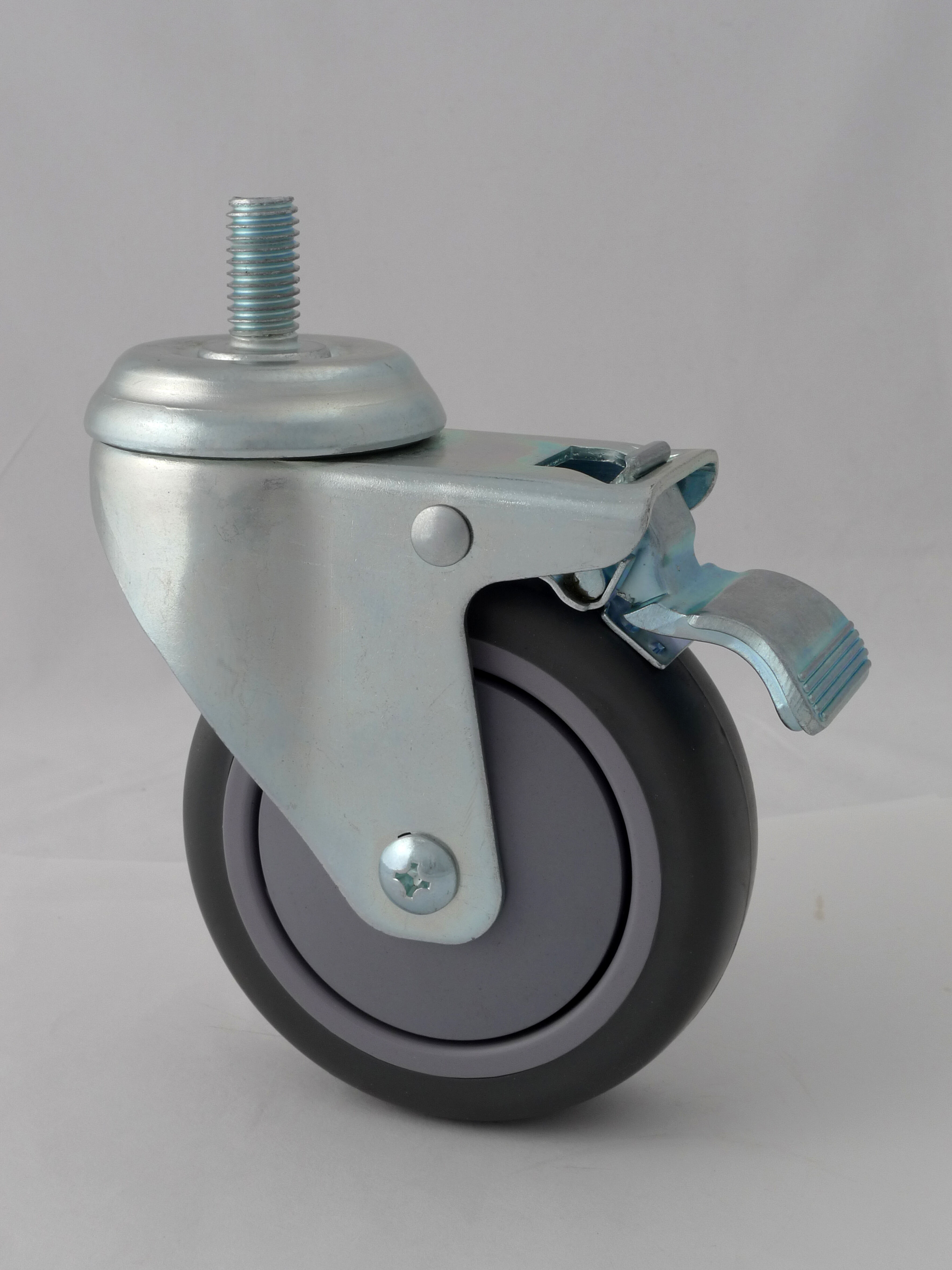
Core Material Science: How Polymer Choice Dictates Trolley Wheels Durability
Polyurethane vs. Nylon vs. TPU: Wear Rate Comparison Under Sustained Load and Shear Stress
Choosing the right polymer material makes all the difference when it comes to how long trolley wheels will last. When put under continuous weight of around 500 kilograms, polyurethane shows about 40 percent less wear compared to nylon because it bounces back better and holds together at a molecular level. Nylon is cheaper upfront but tends to crack over time when subjected to sideways forces, usually showing signs of damage after approximately ten thousand cycles. That makes it less ideal for places where wheels get used constantly throughout the day. Thermoplastic polyurethane or TPU sits somewhere between these options. It can handle tearing forces above ninety kilonewtons per square meter, although exactly how well it performs depends quite a bit on what kind of plasticizers were added during manufacturing. Facilities dealing with lots of traffic every day often find that switching to polyurethane pays off in the long run despite paying roughly twenty five percent more initially. The wheels simply need replacing less frequently since they wear down consistently rather than failing suddenly.
Shore Hardness Trade-Offs: Balancing Floor Protection, Load Support, and Chunking Resistance in Trolley Wheels
| Shore Hardness | Load Capacity | Floor Damage Risk | Chunking Resistance |
|---|---|---|---|
| 80A–85A | Low–Moderate | Minimal | Excellent |
| 90A–94A | High | Moderate | Good |
| 95A+ | Very High | Significant | Poor |
The hardness level needs to match what's actually needed on the job floor, not just picked randomly from specs sheets. Wheels rated softer at around 80A to 85A work great for protecting delicate floors such as epoxy coatings or vinyl surfaces. But watch out—they start to show wear when loaded beyond about 800 kilograms. The middle range stuff from 90A up to 94A can handle roughly double that weight at 1,200 kg, plus they stand up better against cracks from impacts. That makes these mid hardness wheels pretty popular across different kinds of factories and warehouses. Going harder than 95A gives maximum carrying power, though it comes with tradeoffs like damaged tiles and concrete breaking away over time. For places where clean floors matter most, like food processing areas where contamination is a big concern, many facilities settle on 92A polyurethane wheels. These maintain good floor protection for epoxy surfaces and still hold up pretty well after thousands of impacts without falling apart completely.
Load Dynamics and Usage Patterns: Quantifying Real-World Stress on Trolley Wheels
Overloading and Cycle Fatigue: Predicting Wear Acceleration from Payload Frequency and Weight Distribution
Putting too much weight on trolley wheels leads to their early demise most of the time. When operators push beyond the recommended capacity even by about 20%, the wear starts happening at an alarming rate because the materials get stressed out and start changing shape permanently. According to industry data from last year's Wear Metrics Study, trolleys that consistently run above 150% of what they're supposed to handle tend to break down around four times quicker than ones staying within limits. And there's another factor working against them too. Trolleys used for over 1,000 heavy lifting tasks each day experience fatigue cracks developing roughly 70% sooner than equipment that gets only occasional use. This makes sense when we think about how metal components degrade under constant pressure versus occasional strain.
Weight distribution is equally critical. Uneven loading concentrates force on individual wheels, causing three distinct failure modes:
- Premature tread loss, up to 50% faster on overloaded units
- Radial cracking, driven by imbalanced lateral force vectors
- Bearing seizure, often triggered when side-loading exceeds a 10° offset
Transient dynamic forces—such as abrupt stops or transitions across expansion joints—generate momentary spikes that exceed static load limits by 2–3×. Mitigating these through sensor-enforced load limits, optimized transport paths, and scheduled wheel rotation extends service life by 2–3 years.
Floor Interface & Environment: Hidden Contributors to Trolley Wheels Degradation
Abrasion Profiles Across Common Surfaces: Concrete, Epoxy, and Uneven Tile Impact on Trolley Wheels Lifespan
The way floors are shaped and made really affects how fast things wear down. Take uncoated concrete for instance it has those little rocks sticking out that basically work like tiny sandpaper particles, slowly wearing away tire treads over time. Epoxy coated floors seem better at first because they cut down on friction, but when the coating starts to wear off in spots, it creates pressure points that actually speed up damage. And then there's tiles that aren't perfectly flat these can cause constant bouncing around which leads to small cracks forming and bits breaking off from the edges, particularly noticeable with hard rubber wheels commonly used in warehouses and factories.
The choice of Shore hardness really depends on what kind of floors we're dealing with. Wheels rated at 85A or higher hold up pretty well against concrete abrasion, but they tend to crack and break down when used on tile surfaces. On the flip side, softer compounds below 75A work great for absorbing shocks on uneven floors, though these materials wear out much faster on rough concrete surfaces. When manufacturers match both the polymer chemistry and the right hardness level to specific flooring conditions, they typically see wheel life extended somewhere between 30% to 50%. This figure comes from years of tracking equipment performance across various warehouses and manufacturing facilities during routine maintenance checks.
Proactive Longevity Management: Maintenance and Procurement Strategies for Trolley Wheels
Getting equipment to last longer really comes down to regular maintenance and smart buying decisions instead of just replacing things when they break. Cleaning surfaces monthly helps get rid of gritty stuff that can wear down components at a rate about 40% faster in places with concrete floors. Applying silicone lubricant every three months keeps bearings running smoothly on those polyurethane and TPU wheels without messing up the material itself. When doing visual checks, look out for telltale signs like flat spots forming, cracks appearing on surfaces, or uneven tire wear patterns. Catching these issues early means fixing problems before something breaks completely and causes major disruptions during work hours.
Procurement strategy must align with operational reality:
- Specify Shore hardness (70A–95A) based on verified floor sensitivity and peak load requirements—not catalog defaults
- Select polymers for environmental exposure: polyurethane for chemical resistance and temperature stability, TPU where flexibility and recyclability matter
- Build in a 25% load capacity buffer over maximum expected payload to prevent fatigue-driven degradation
Track failure rates by brand, model, and installation date to build objective procurement criteria. Pair this with operator training on centered loading, smooth directional transitions, and avoiding curb impacts—practices proven to reduce premature wear by up to 60%.
FAQ
What are the main polymer materials considered for trolley wheels?
The main polymer materials used for trolley wheels include polyurethane, nylon, and thermoplastic polyurethane (TPU).
How does Shore hardness affect trolley wheels performance?
Shore hardness affects load capacity, floor protection, and chunking resistance. Softer wheels protect delicate floors but wear faster under heavy loads, while harder wheels support more weight but may damage floors.
What impacts the lifespan of trolley wheels the most?
The lifespan is most affected by the type of polymer used, Shore hardness, load dynamics, weight distribution, and the type of surfaces the wheels are used on.
What maintenance strategies can extend trolley wheel life?
Strategies include regular cleaning, using the correct lubricants, routine visual checks, and choosing materials that fit specific floor conditions better.
Table of Contents
- Core Material Science: How Polymer Choice Dictates Trolley Wheels Durability
- Load Dynamics and Usage Patterns: Quantifying Real-World Stress on Trolley Wheels
- Floor Interface & Environment: Hidden Contributors to Trolley Wheels Degradation
- Proactive Longevity Management: Maintenance and Procurement Strategies for Trolley Wheels
- FAQ


